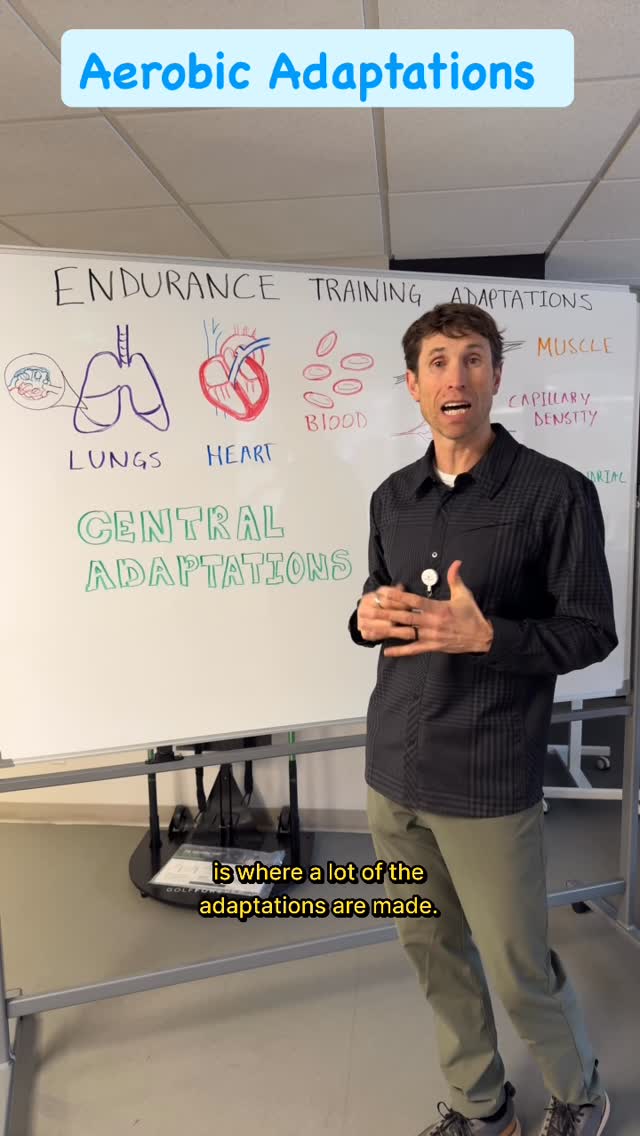
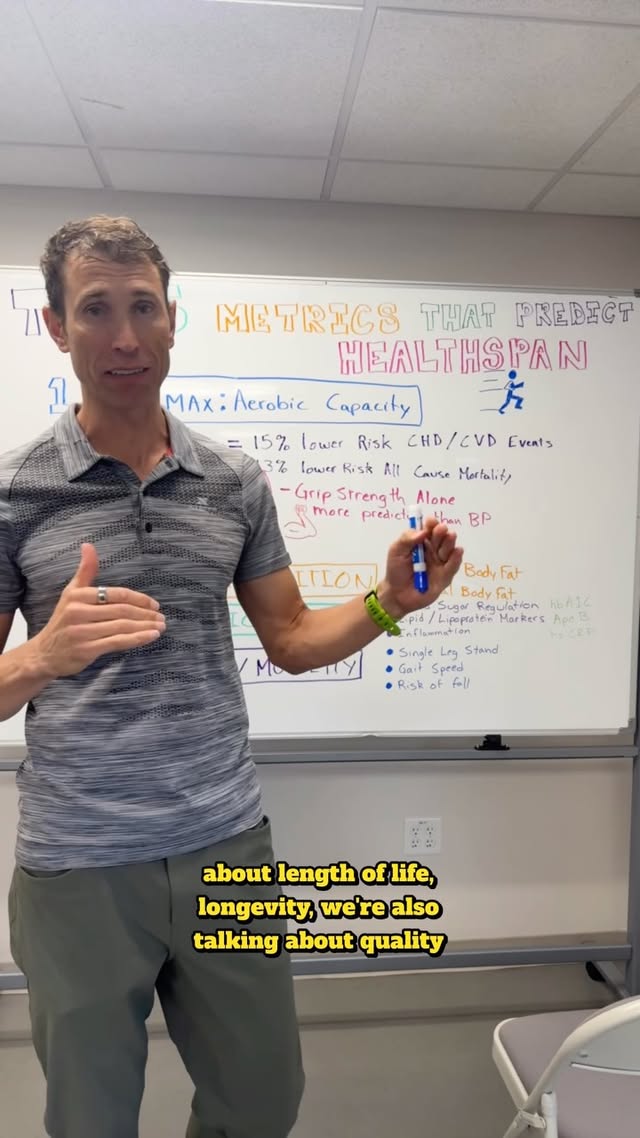
Healthspan whiteboard lessons

Short whiteboard teaching for Vail Healthspan clients. Watch in order or jump by topic.

Start here

Watch-order: Training Principles A1–A5

Begin with Module A in order: General Adaptation, Progressive Overload, SAID, Reversibility, then Periodization. Each lesson is a short teaching summary here; Instagram is optional if you want the whiteboard video.

A five-part arc on how adaptation, overload, specificity, reversibility, and periodization fit together.

  1. A1 · General Adaptation
  2. A2 · Progressive Overload
  3. A3 · SAID Principle
  4. A4 · Reversibility
  5. A5 · Periodization

Training Principles

A five-part arc on how adaptation, overload, specificity, reversibility, and periodization fit together.

  • A1Watch order

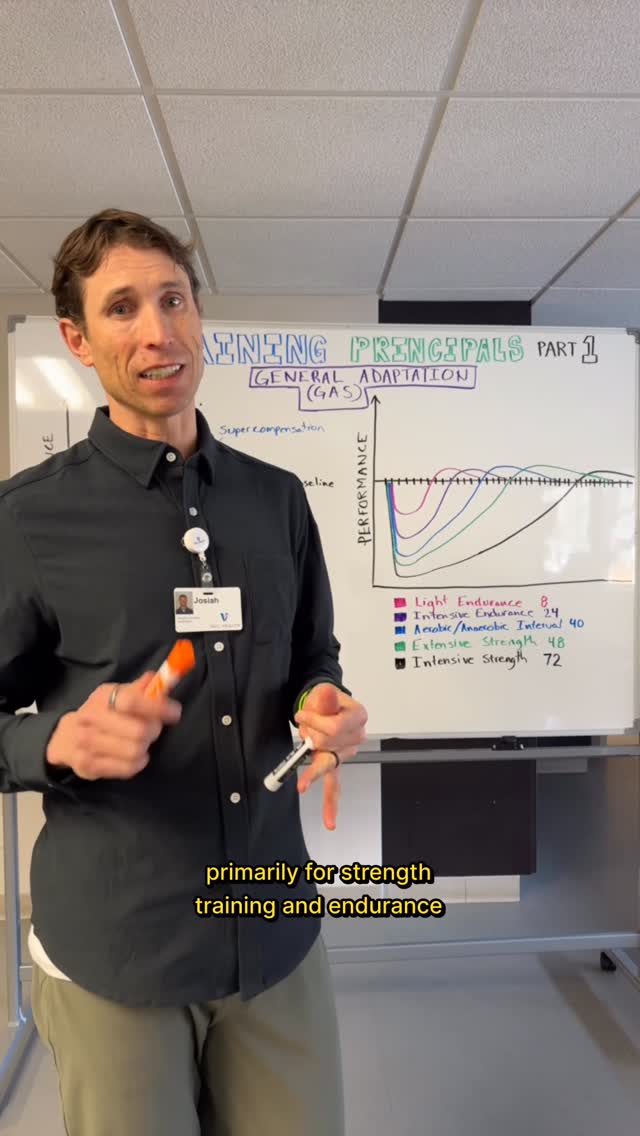
    General Adaptation

    Training works because your body adapts to the stress you give it, then rebuilds a little stronger during recovery. Too little stimulus and nothing changes; too much, too soon, and you break down instead of building up. This first lesson is the reason the rest of Module A exists: stress, recover, adapt. Watch A1 before the others so progressive overload and periodization have a foundation.
  • A2Watch order

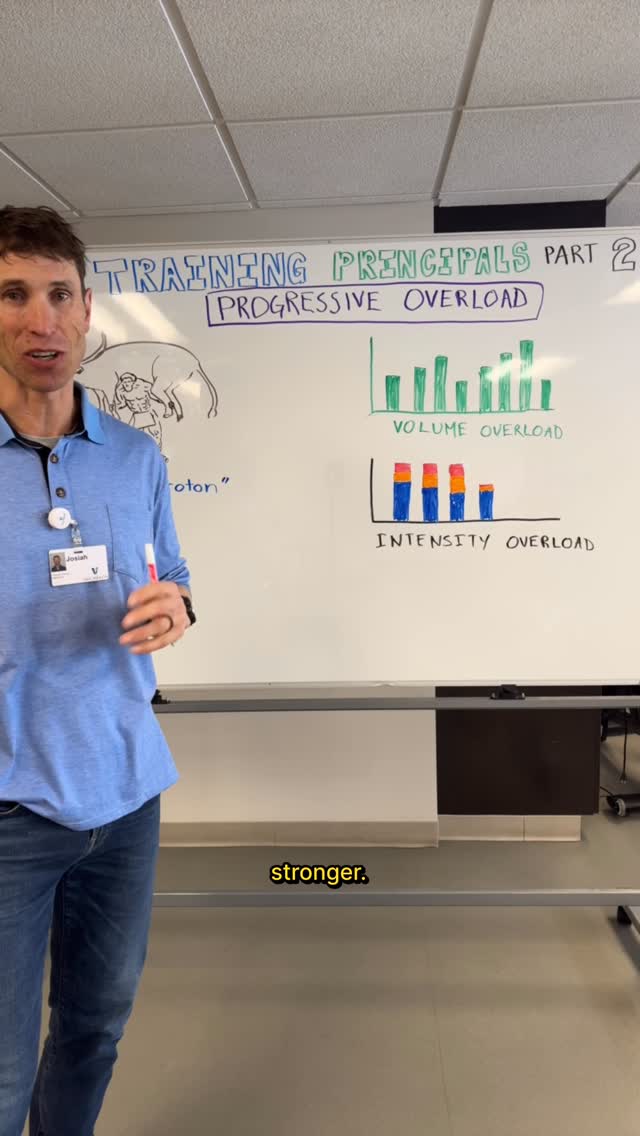
    Progressive Overload

    Progressive overload is how you keep adapting after the first easy gains. You add a little more work over time — load, reps, time, or density — so the stimulus stays just hard enough. Jumping too far ahead is how people get hurt or quit. This lesson shows a safer way to progress week to week.

  • A3Watch order

    SAID Principle

    SAID means Specific Adaptation to Imposed Demands: you get better at what you actually practice. If the goal is hiking, lifting, or a VO2 test, the work should look like that goal often enough to count. Random hard sessions can make you tired without making you better at the thing you care about.

  • A4Watch order

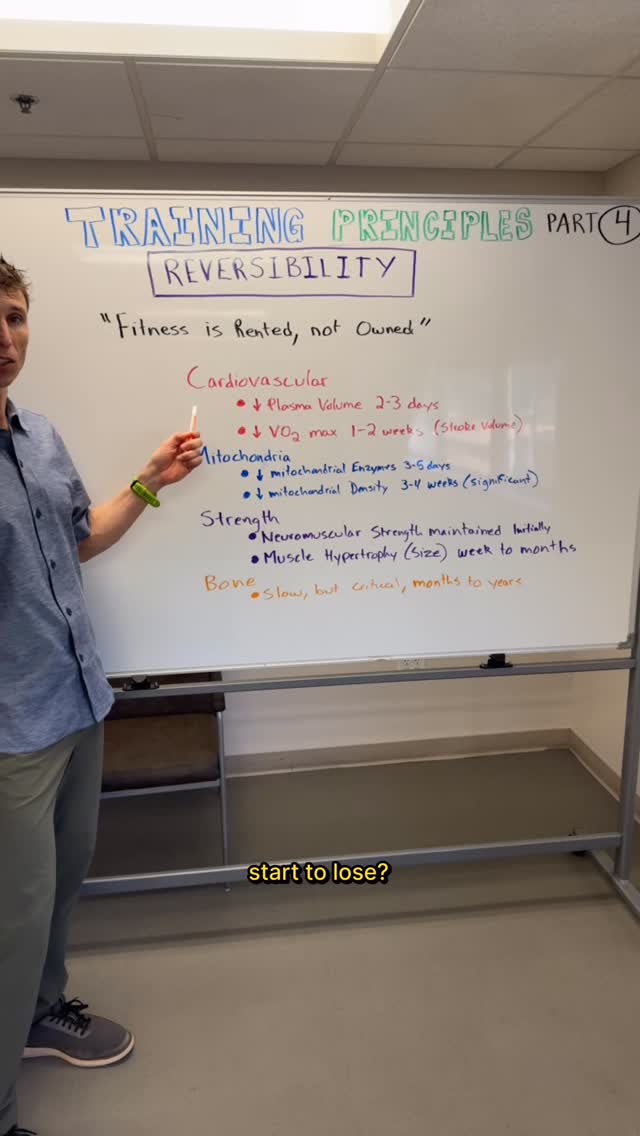
    Reversibility

    Fitness is rented, not owned. When the stimulus stops, the adaptation fades — sometimes faster than it felt to build. That is not failure; it is physiology. Consistency, even in smaller doses, is how you keep what you already earned.

  • A5Watch order

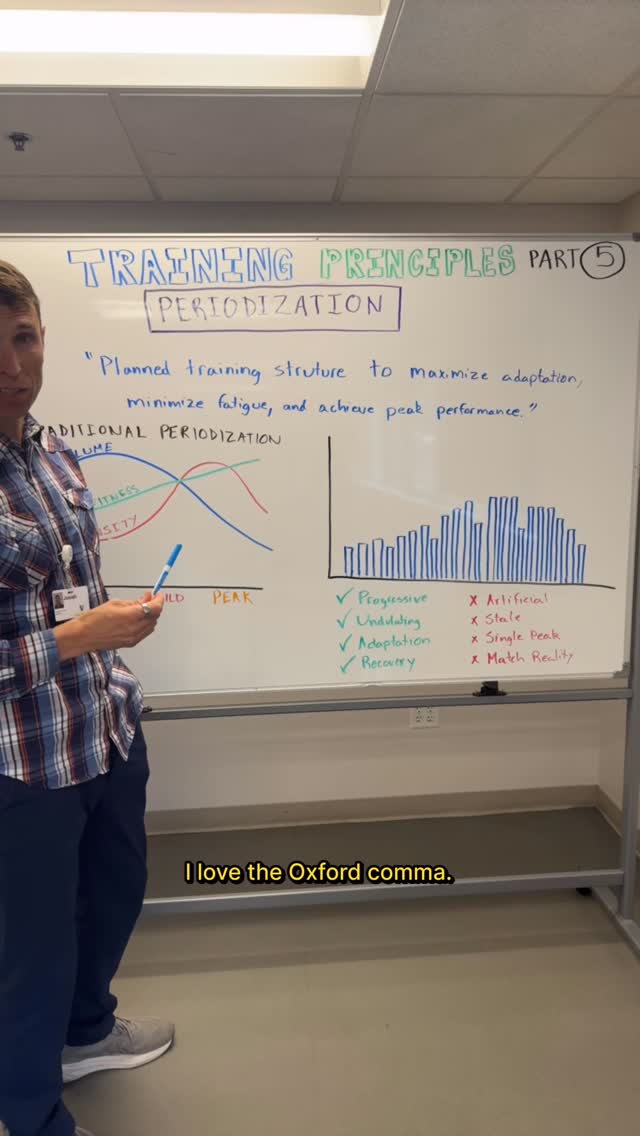
    Periodization

    Periodization is a plan for when to push and when to back off so you can peak without burning out. Hard blocks need easier blocks. This last Training Principles lesson ties A1–A4 together: adapt, overload, stay specific, and protect what you built.

Intensity and aerobic engine

How intensity fits on a continuum, and why two athletes with similar VO2 can still need different work.

  • B1

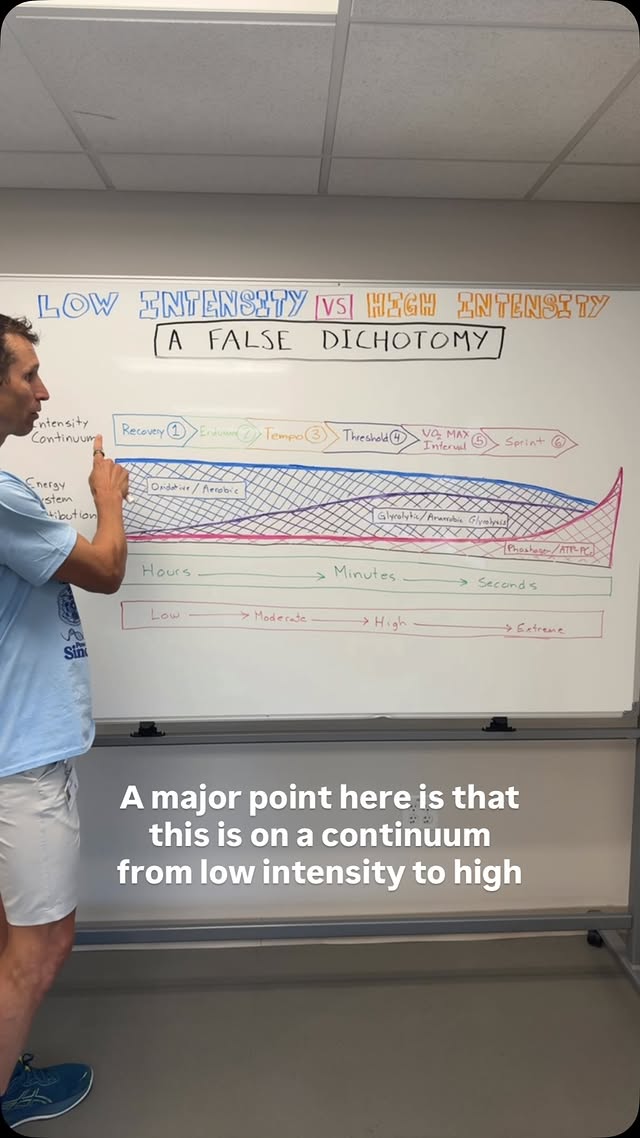
    Low vs high intensity continuum

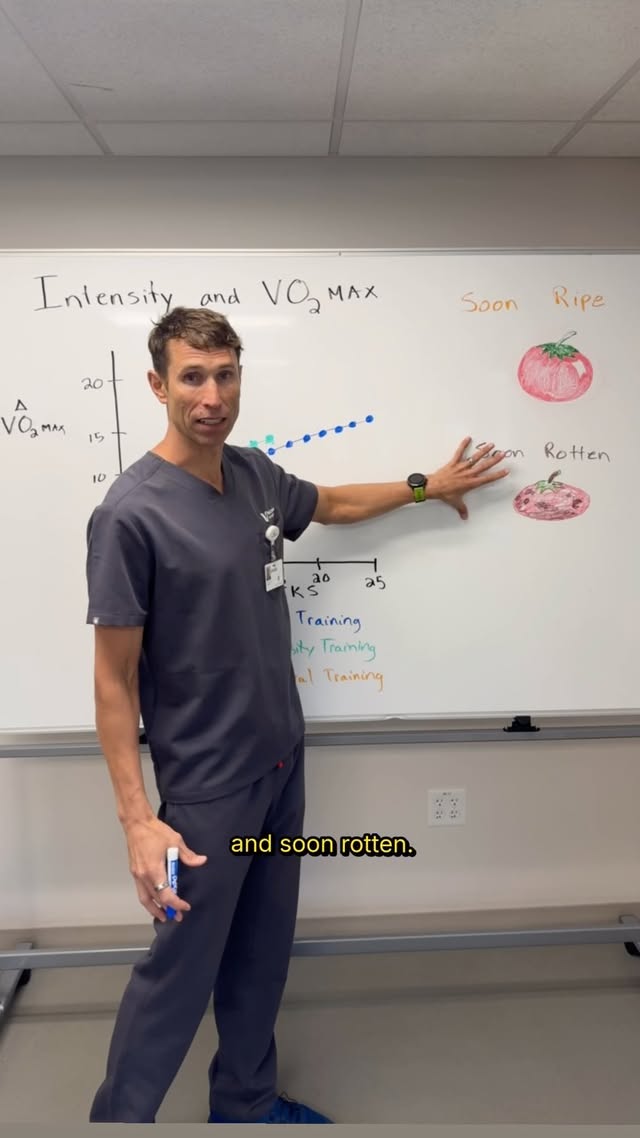
    Intensity is a continuum, not two camps. Easy and hard work overlap, and most people need both — just not in equal amounts every day. This lesson helps you stop arguing “low vs high” and start placing a session on the right part of the range.

  • B2

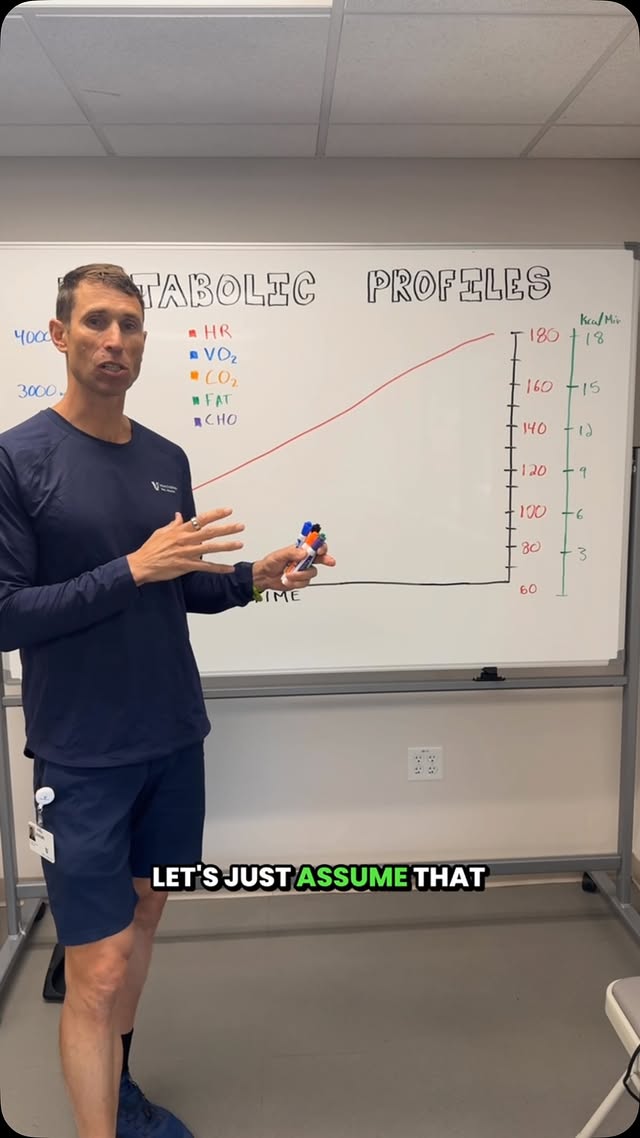
    Same VO2, different metabolic profiles

    Two people can share a similar VO2 max and still need very different training. Metabolic profile, thresholds, and how you produce energy change the work that helps. Use this when you are tempted to copy someone else’s plan because their number looks like yours.

Strength, body composition, fuel

Whiteboard basics on muscle adaptations, visceral fat, fuel use, muscular power, protecting lean mass, concurrent training, and fat-loss biochemistry.

  • C1

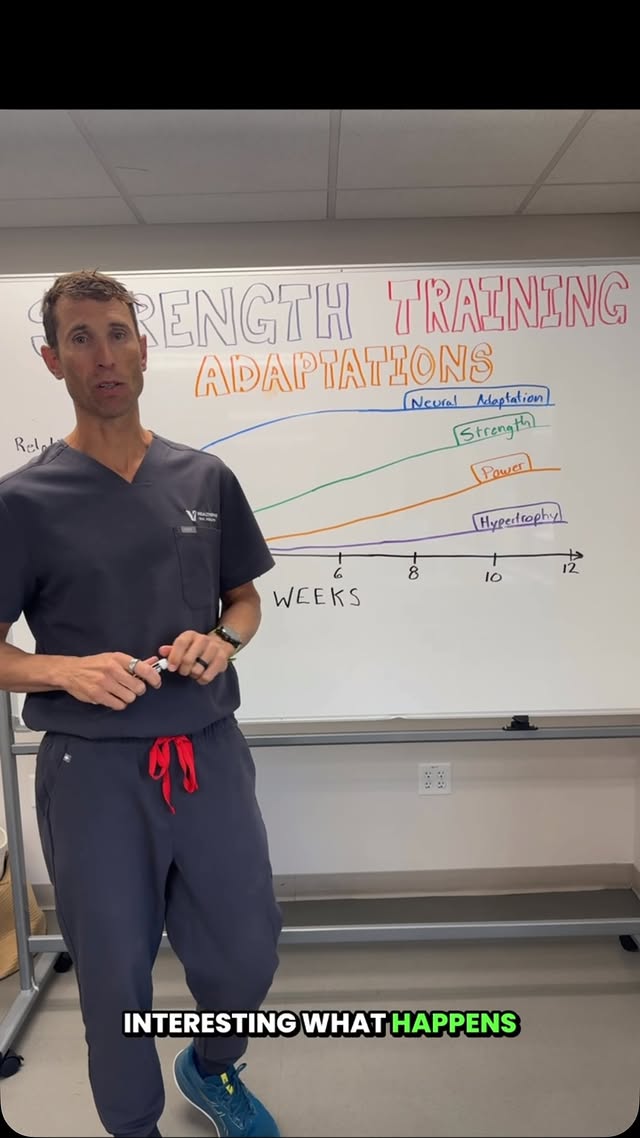
    Strength-training adaptations

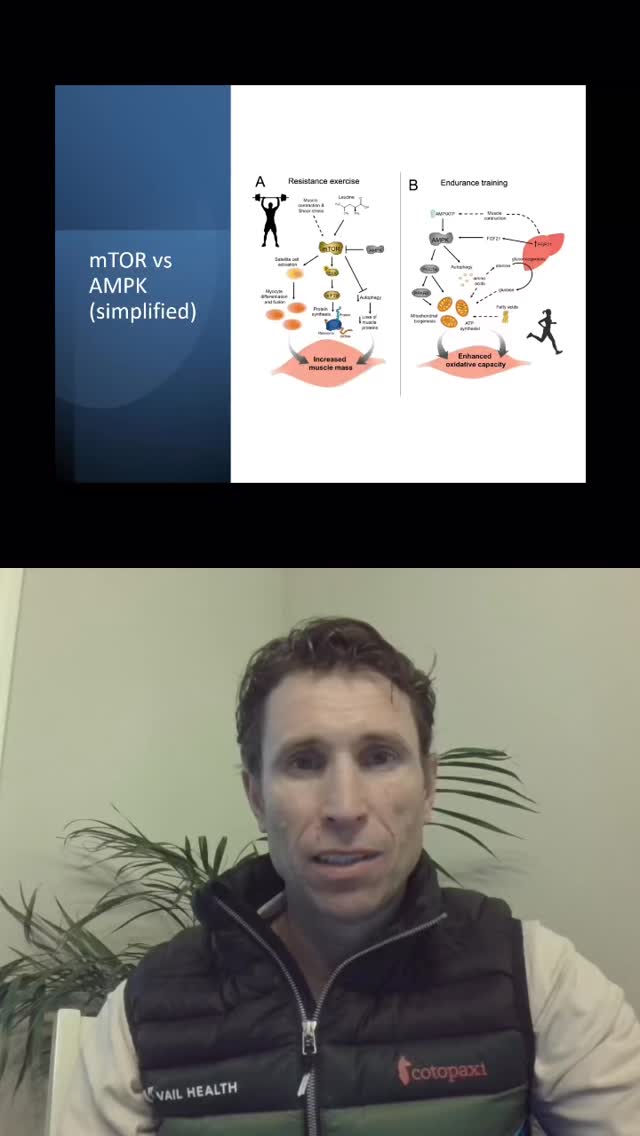
    Strength training sends a clear signal to muscle, bone, and nervous system. Hypertrophy and strength are trainable across ages; the dose and recovery just have to match the person. This whiteboard covers what actually changes when you start lifting with intent.

  • C2

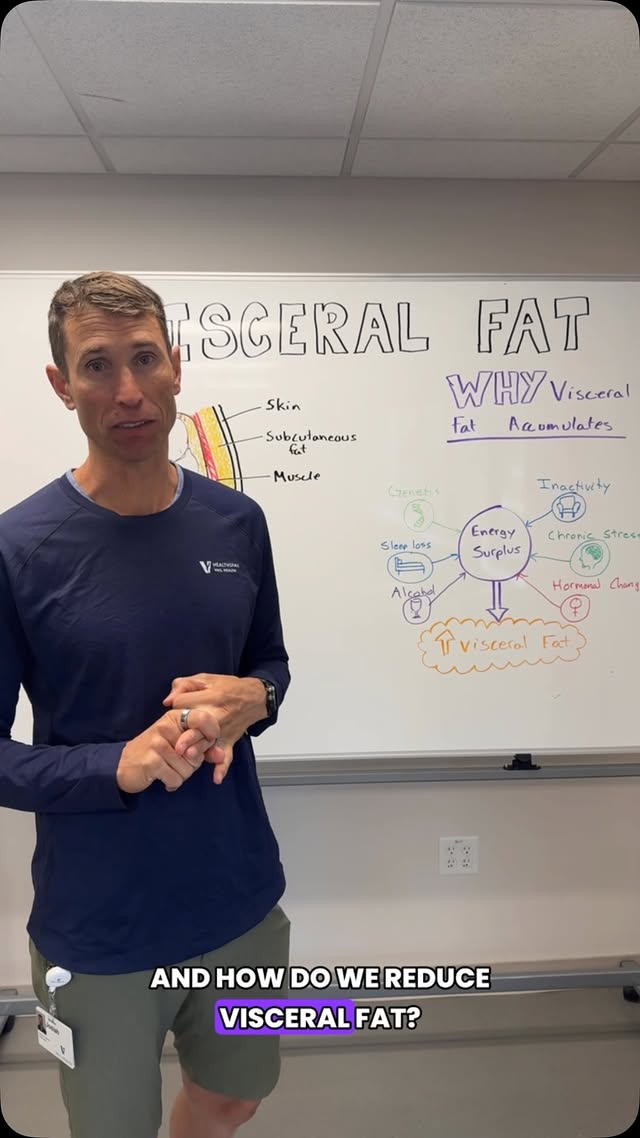
    Visceral fat

    Visceral fat sits deeper around organs than the fat you can pinch. It matters for metabolic and long-term health, and it responds to the same unglamorous levers: movement, food pattern, sleep, and consistency. This is education on what it is and how people reduce it — not a body-shame lecture.

  • C3

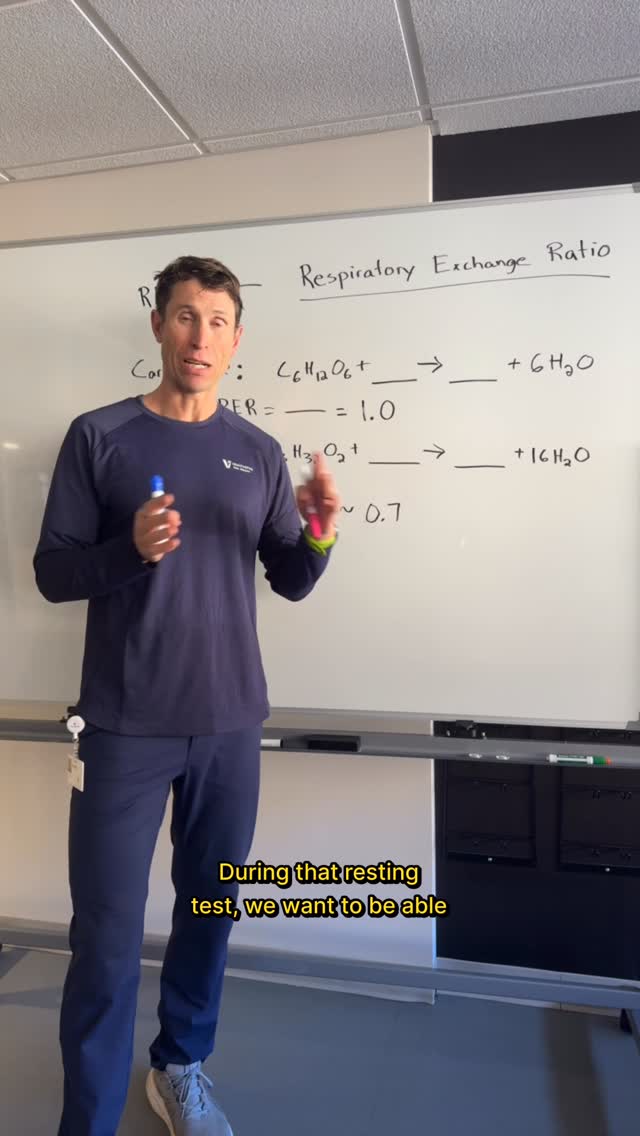
    Fuel partitioning (fat vs carb)

    Your body uses fat and carbohydrate in different mixes at rest and as work gets harder. You do not have to pick a tribe. This lesson is a simple way to think about fuel partitioning so training and meals support the same session.

  • C4

    Muscular power as longevity metric

    Muscular power — not only max strength — supports independence and lowers fall risk. It is trainable later in life. This reel is about why power belongs on a healthspan scorecard.

  • C5

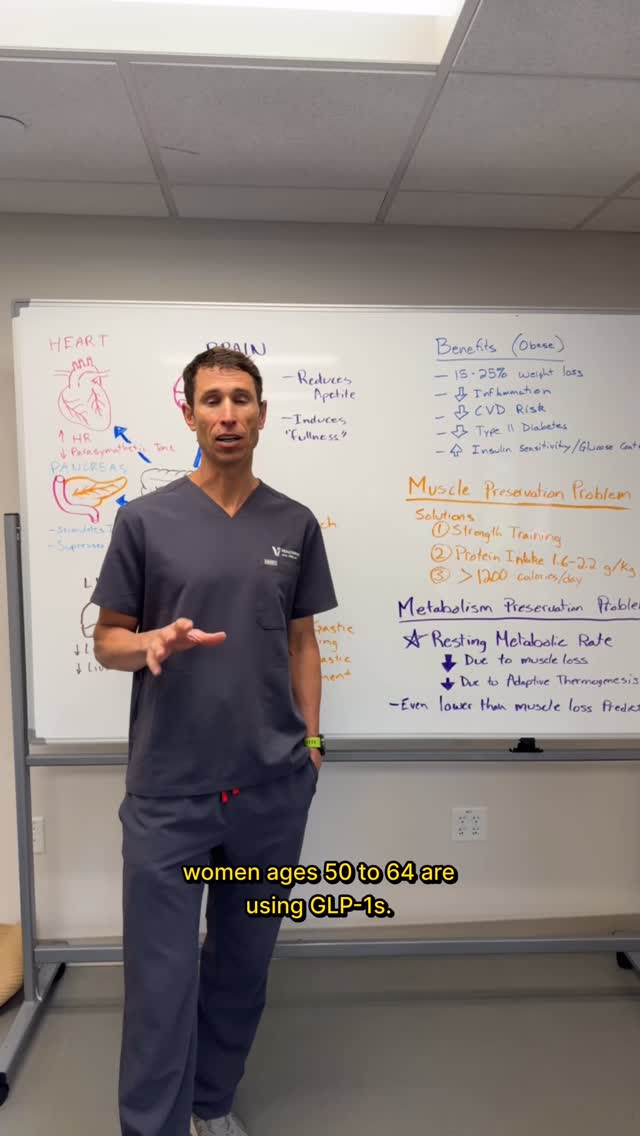
    GLP-1s and protecting lean mass

    Rapid weight loss can cost lean mass. If GLP-1 medicines are part of someone’s care, protecting muscle and avoiding frailty is part of the healthspan conversation. Education only; follow the prescribing clinician.

  • C6

    Concurrent strength + endurance trade-offs

    Strength and endurance in the same week can interfere if both are maxed. This lesson is the trade-off list: what to consider so you can do both without wrecking either.

  • C7

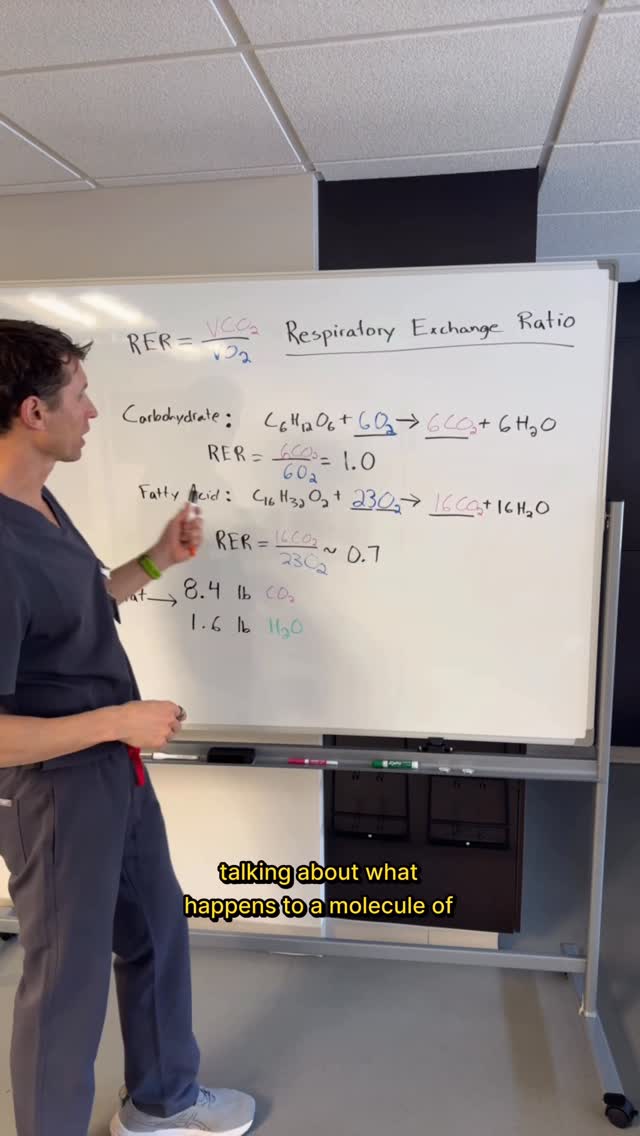
    Fat loss biochemistry: exhaled as CO2

    When you lose fat, most of it leaves as carbon dioxide you exhale, plus water. A simple biochemistry reminder that “where did the fat go?” has an answer — and it is not a magic supplement.

Recovery signal

One clear lesson on monitoring recovery without obsession.

  • D1

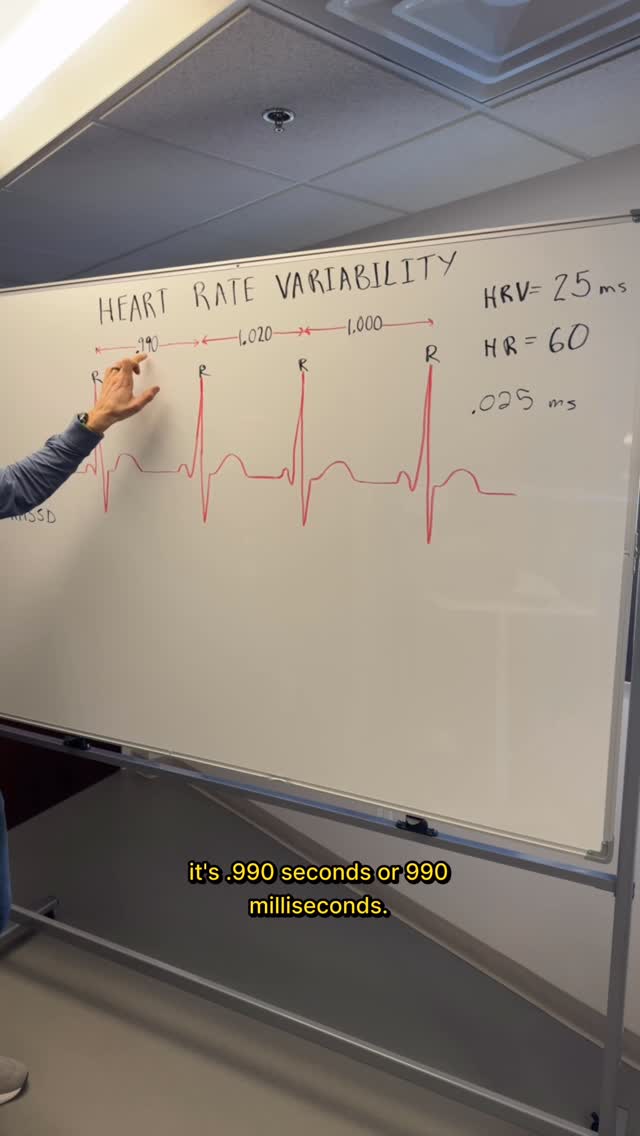
    HRV explained

    HRV is a recovery signal, not a scoreboard. A nighttime baseline is more useful than comparing your number to a friend or an app leaderboard. Use it as one input — then still look at sleep, mood, and how the work felt.

VO2, thresholds, and intensity mix

How VO2 max, first-threshold intensity, and how you mix easy vs hard work fit together.

  • E1

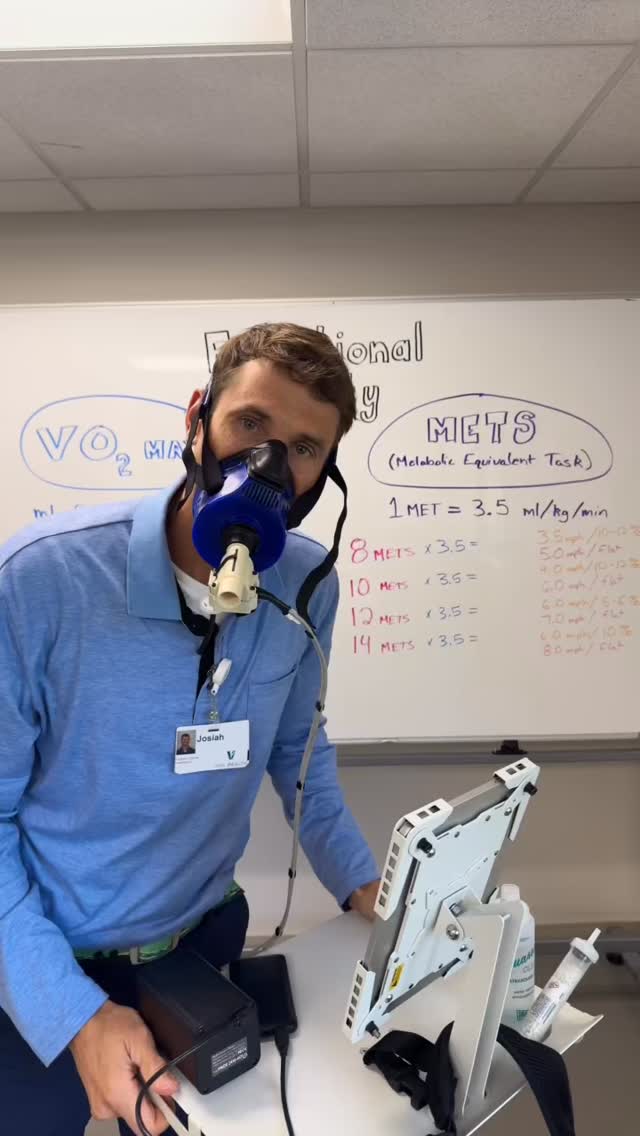
    VO2 max as longevity predictor + home estimate

    VO2 max is one of the stronger longevity-related fitness markers we can train. This reel covers why it matters and a home estimate approach (Cooper / Balke) — an estimate, not a lab test.

  • E2

    VO2 max: HIIT plateau vs endurance base

    HIIT can raise VO2, then plateau if that is all you do. An endurance base still matters for the aerobic engine. This lesson is about pairing hard intervals with enough easier work to keep improving.

  • E3

    VT1/LT1 defined (Part 1)

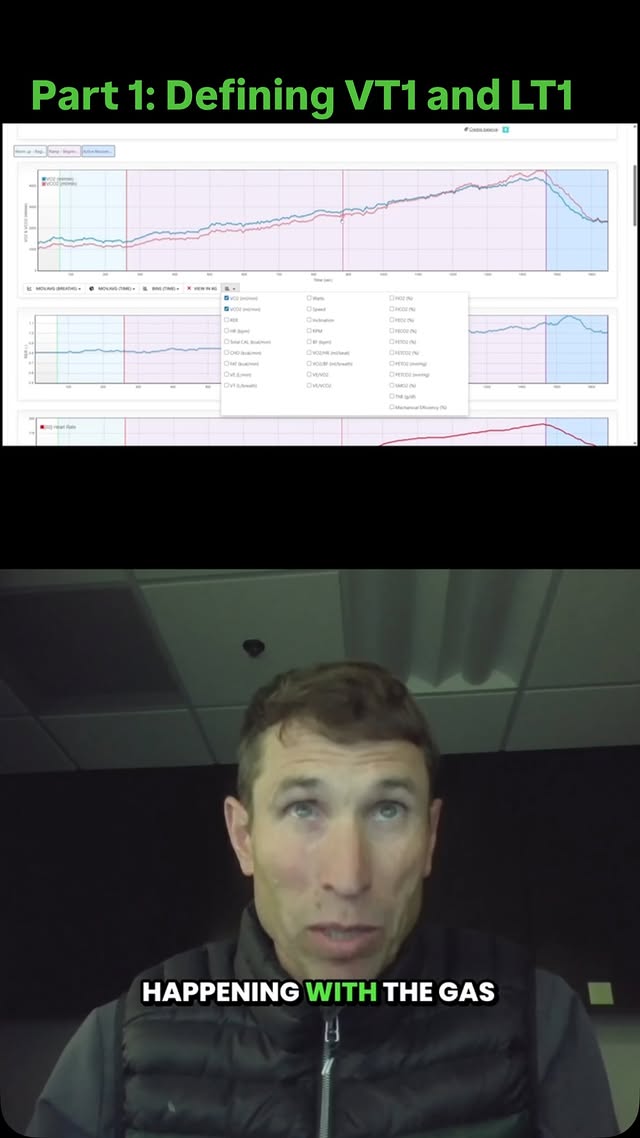
    VT1 and LT1 are two ways of talking about a sustainable, fat-burning-ish intensity — the effort you can hold while still conversing. Part 1 defines the idea so later intensity work has a landmark.

  • E4

    Higher intensity zones / Norwegian 4x4 nuance

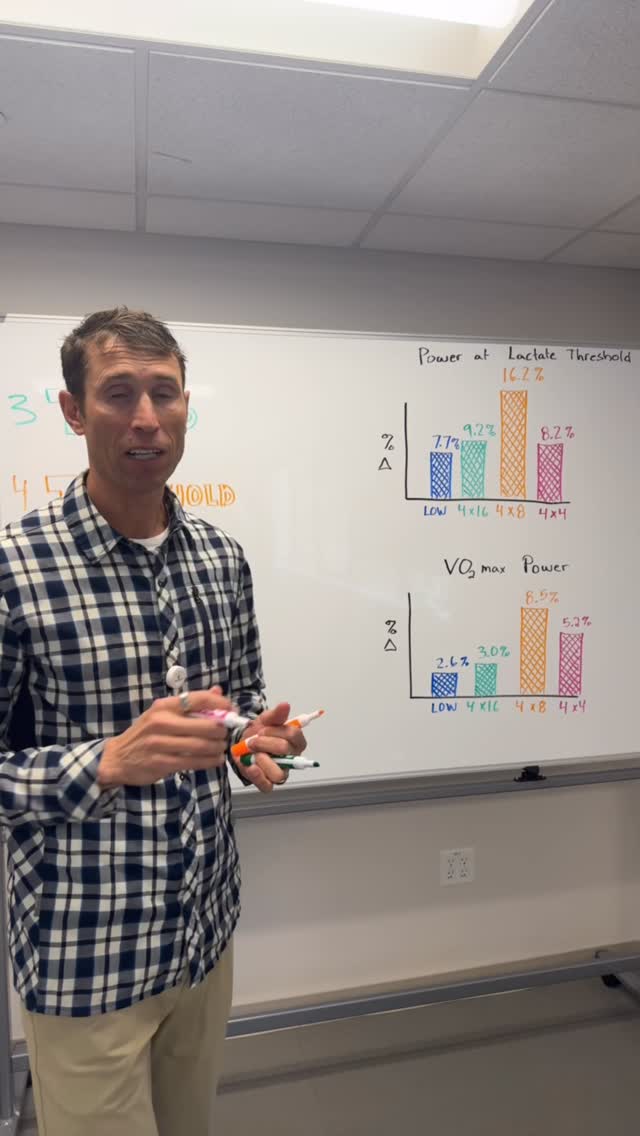
    Zones 3 to 5 are not the enemy. Norwegian 4x4 is one hard-session template, not the only one. This lesson puts higher-intensity work in context so it stays a tool, not a personality.

  • E5

    Polarized / pyramidal intensity distribution

    Many well-trained people spend most of their time at low to moderate intensity, with less time truly hard. Polarized and pyramidal distributions are maps for that mix — useful when every session has been “kinda hard.”

  • E6

    Endurance training adaptations (beginner dosing)

    Consistent aerobic work changes the engine: more capacity, better recovery between efforts, and a beginner-friendly weekly dose. Start repeatable, then build.

Healthspan metrics

How to read biomarkers and the lifestyle metrics that actually predict healthspan.

  • F1

    The Biomarker Paradox

    Biomarkers are signals, not finish lines. Chasing one lab or one wearable number can distract from the lifestyle pattern that actually moves healthspan. This reel frames tests as information for a plan, not a biohack contest.

  • F2

    Top 5 healthspan predictive metrics

    A short look at modifiable lifestyle factors that predict healthspan better than most one-off gadgets. The point is what you can train and repeat: movement, fueling, recovery, and the rest of the shields.

Back to Education

Education only. Not a substitute for medical care.

Stay connected

Learn more about the Healthspan program and join our event distribution list.